
How Close to Your House Can You Plant a Royal Palm in Southwest Florida?
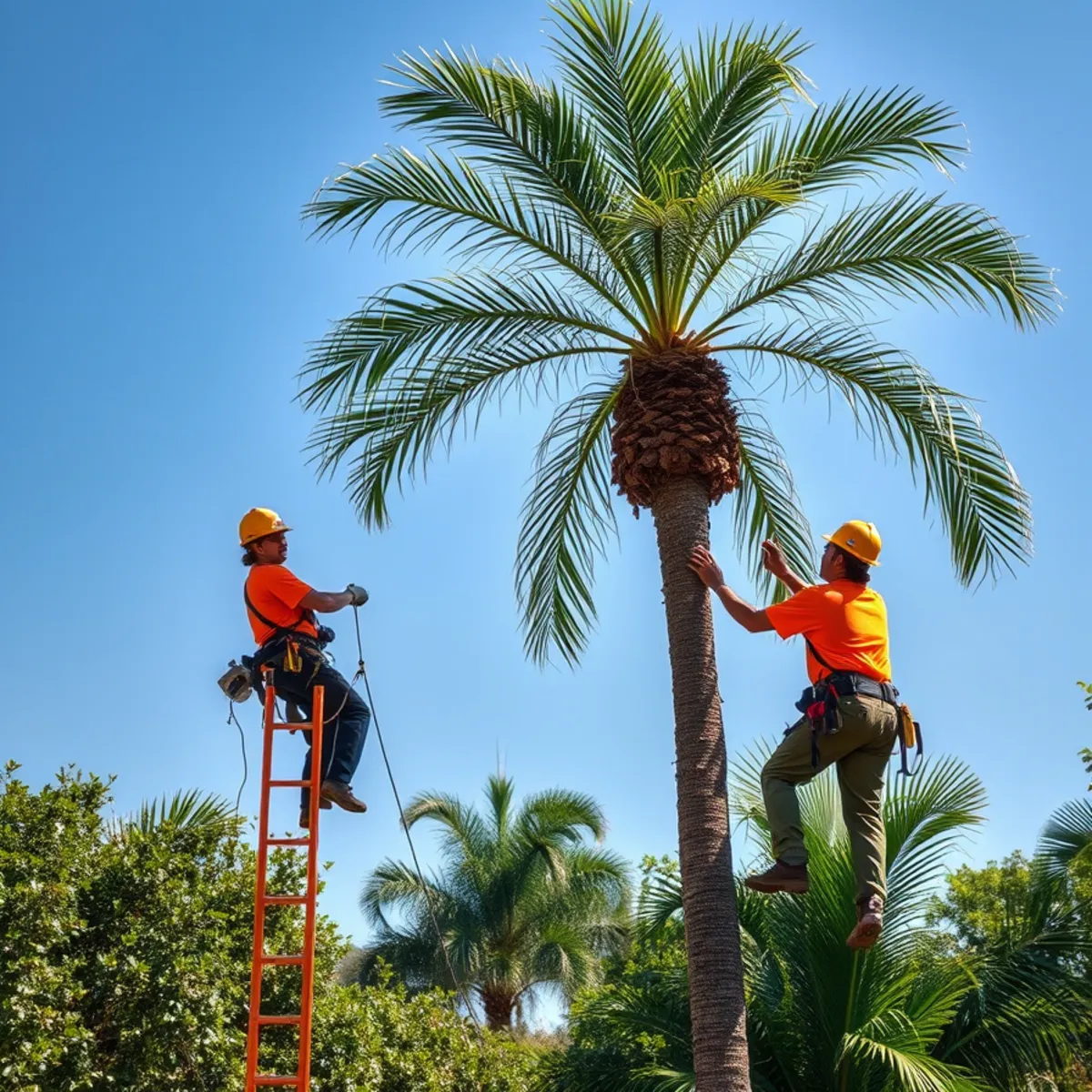
The Florida Royal Palm (Roystonea regia) is among the most magnificent tropical trees in the world, with smooth marble-like concrete trunks and stately crowns reaching heights of 60 to 80 feet. However, planting a juvenile Royal Palm too close to a house or pool deck often leads to expensive structural conflicts a decade later.
Trunk Swell and Foundation Setback Guidelines
A mature Royal Palm develops a massive swollen base ('calyx') up to 3 to 4 feet in diameter. In addition, its dense root ball exerts heavy lateral pressure. We recommend a minimum planting setback of 15 to 20 feet from home foundations, driveways, and swimming pool shells to ensure roots do not crack underground plumbing or lift pavers.
The Danger of Falling 50-Pound Fronds
Royal palms are self-cleaning: when a frond dies, it detaches automatically. A single mature Royal Palm frond with its heavy petiole boot weighs between 30 and 50 pounds and falls from 60 feet in the air. If planted within 15 feet of your roof, falling fronds can easily shatter clay roof tiles, puncture aluminum gutters, or crush glass pool cages.
Overhead Utility and Clearance Rules
Never plant Royal Palms directly beneath overhead electric power service drops. Because Royal Palms cannot be pruned for height, any palm planted near wires will eventually have to be completely removed once it grows into the utility corridor.
Evaluating 50-Pound Falling Frond Hazards and Roof Damage
A mature Royal Palm (Roystonea regia) grows 60 to 80 feet tall with massive fronds that measure 10 to 15 feet in length and weigh up to 50 pounds. When these heavy fronds naturally detach from high in the canopy, their heavy woody sheaths can easily shatter tile roofs, smash skylights, and crush aluminum pool cages below.
Recommended Setback Distances from Foundations, Pipes, and Pools
Arborists recommend planting Royal Palms a minimum of 12 to 15 feet away from residential house foundations, roof overhangs, and swimming pool enclosures. This clearance accommodates the swelling trunk base (which can reach 2 to 3 feet in diameter), prevents fronds from contacting gutters, and allows room for professional climbing maintenance.
Professional Tree Care Standards & Real-World Tradeoffs
Managing mature trees across Lehigh Acres and Lee County presents challenges unique to Southwest Florida. With an annual rainfall average near 56 inches, high water tables, and saturated sandy subsoils, trees face structural root shear during summer microbursts and tropical storm cycles.
Cutting corners—whether through improper “hurricane cuts”, aggressive flush-cuts, or driving 30-ton bucket trucks across buried septic systems—inevitably leads to accelerated decay, pest infestations, or costly property repairs.
We maintain branch collar integrity and natural branch defense zones. We never top shade trees or remove more than 20–25% of live foliage in a single season.
Traditional rope-and-saddle access allows us to work inside fenced backyards, canal banks, and over pool enclosures without heavy machinery damaging sandy lawns or septic tanks.
Property Owner Action Plan & Maintenance Checklist
Essential verification steps recommended before and during Florida storm season:
| Inspection Phase | Action Item | Safety & Compliance Value |
|---|---|---|
| 1. Ground & Root Assessment | Check root flare for fungal conks, loose soil mounding, or decayed roots. | Identifies catastrophic root-plate instability before high winds. |
| 2. Clearance & Deadwood | Prune branches overhanging roofs, power lines, and pool lanai cages. | Prevents structural roof punctures and gutter abrasion. |
| 3. Canopy Aerodynamics | Selectively thin interior secondary branches to reduce wind drag. | Allows hurricane gusts to blow through without uprooting the tree. |
| 4. Precision Climbing | Engage licensed climbers utilizing friction lowering blocks. | Eliminates heavy crane ruts and guarantees zero lawn compaction. |
Related Services & Local Service Areas
Need assistance with this topic on your property? Explore our dedicated service and municipal location resources:
Questions & Answers About This Guide
Practical advice from experienced Florida tree workers.
Palm roots are fibrous rather than woody, meaning they cannot physically pierce solid concrete. However, expanding root mats can exert upward pressure that cracks thin paver walkways or destabilizes underground irrigation lines.
About T's Trees and Landscaping
T's Trees and Landscaping is Lehigh Acres' hometown tree care specialist, providing 15+ years of traditional rope-and-saddle climbing, zero lawn rutting, and 24/7 storm damage recovery across Lee County.
Call (855) 615-0568 for a Free Written QuoteProtect Your Home Before the Next Storm Hits
Get a free on-site hazard assessment from Lehigh Acres' traditional climbing specialists. Zero lawn rutting, zero septic tank damage, and 24/7 emergency response.