
How to Clean and Skin Palm Trunks Safely Without Attracting Palm Weevils
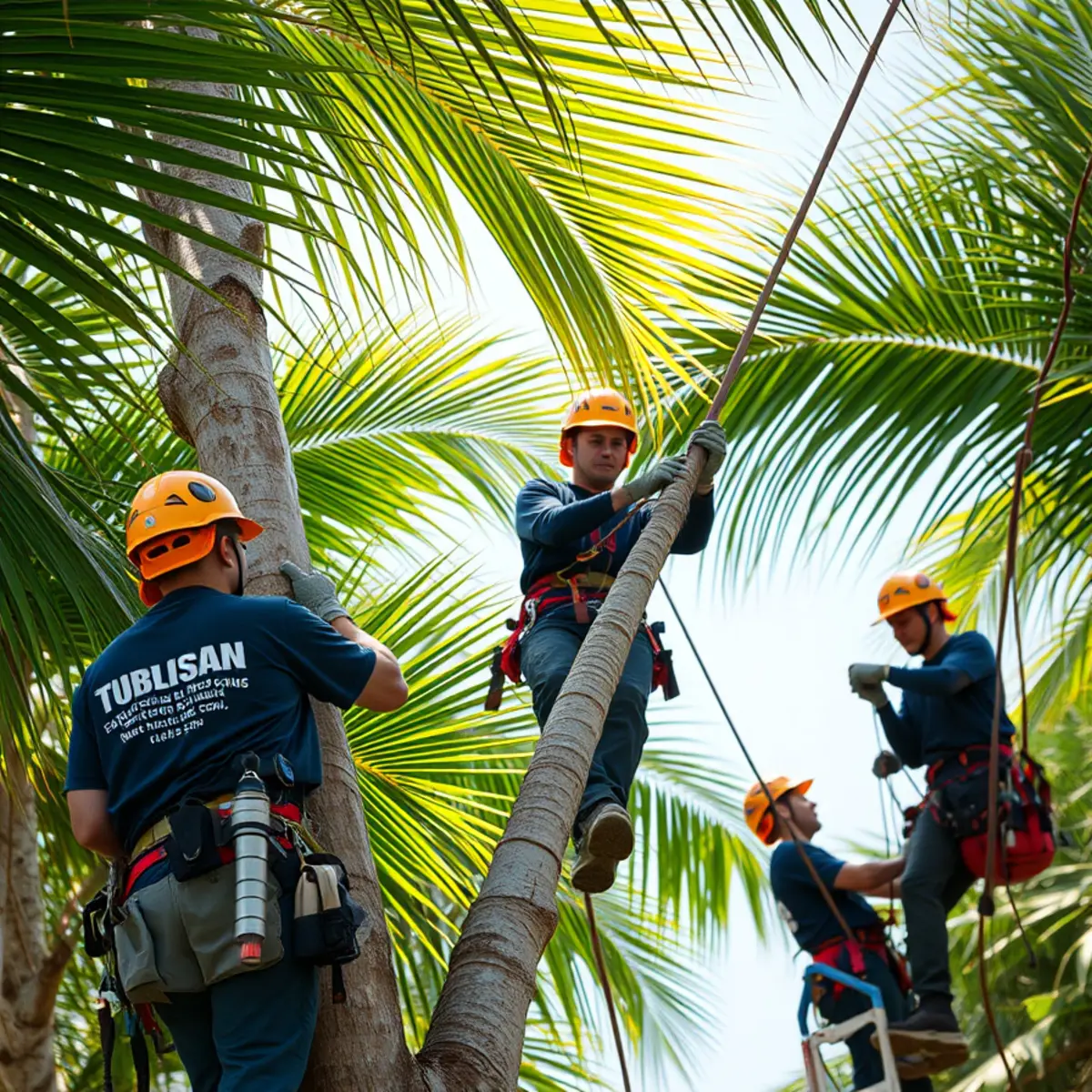
Trunk skinning (also called diamond-shaving or palm peeling) transforms ragged, boot-covered palm trunks into smooth, architectural showpieces. However, performing this service incorrectly can gouge living vascular tissue and release volatile kairomones that attract destructive weevils.
What Is Palm Skinning and Why Do Property Owners Love It?
As palm fronds die and fall, their fibrous bases ('boots') cling to the trunk. Over time, these boots fray, harboring cockroaches, rats, scorpions, and unwanted climbing vines. Skinning carefully slices off these old boot remnants, revealing the clean wood-grain pattern.
Preventing Palm Weevil Infestations
The South American Palm Weevil and Palmetto Weevil are drawn to fresh wounds on palm trunks. If a trimmer cuts into the living green tissue beneath the boots, the sap odor can attract weevils from miles away. Our climbers use precision razor-sharp curved hand knives held at a shallow tangential angle that never penetrates the bark mantle.
Post-Skinning Care and Disinfection
We sterilize our blades in bleach or quaternary ammonium between every tree to prevent cross-contamination of vascular fungal diseases like Ganoderma and Fusarium.
The Botanical Mechanics of Palm Boot Removal
As palm fronds die and fall away, fibrous base remnants called 'boots' often remain attached to the trunk. Over time, these boots trap moisture, dead leaves, and humidity, providing ideal nesting habitats for roof rats, roaches, and snakes. Professional palm skinning carefully carves away these old boots to expose the clean, natural trunk surface.
Preventing South American Palm Weevil and Fungal Infection
The invasive South American palm weevil (Rhynchophorus palmarum) is drawn to the smell of freshly cut palm tissue. When skinning trunks, climbers must use razor-sharp, sanitized blades, avoid gouging into the living trunk tissue, and apply protective antifungal and insecticidal barriers to cut surfaces during high-risk seasons.
Professional Tree Care Standards & Real-World Tradeoffs
Managing mature trees across Lehigh Acres and Lee County presents challenges unique to Southwest Florida. With an annual rainfall average near 56 inches, high water tables, and saturated sandy subsoils, trees face structural root shear during summer microbursts and tropical storm cycles.
Cutting corners—whether through improper “hurricane cuts”, aggressive flush-cuts, or driving 30-ton bucket trucks across buried septic systems—inevitably leads to accelerated decay, pest infestations, or costly property repairs.
We maintain branch collar integrity and natural branch defense zones. We never top shade trees or remove more than 20–25% of live foliage in a single season.
Traditional rope-and-saddle access allows us to work inside fenced backyards, canal banks, and over pool enclosures without heavy machinery damaging sandy lawns or septic tanks.
Property Owner Action Plan & Maintenance Checklist
Essential verification steps recommended before and during Florida storm season:
| Inspection Phase | Action Item | Safety & Compliance Value |
|---|---|---|
| 1. Ground & Root Assessment | Check root flare for fungal conks, loose soil mounding, or decayed roots. | Identifies catastrophic root-plate instability before high winds. |
| 2. Clearance & Deadwood | Prune branches overhanging roofs, power lines, and pool lanai cages. | Prevents structural roof punctures and gutter abrasion. |
| 3. Canopy Aerodynamics | Selectively thin interior secondary branches to reduce wind drag. | Allows hurricane gusts to blow through without uprooting the tree. |
| 4. Precision Climbing | Engage licensed climbers utilizing friction lowering blocks. | Eliminates heavy crane ruts and guarantees zero lawn compaction. |
Related Services & Local Service Areas
Need assistance with this topic on your property? Explore our dedicated service and municipal location resources:
Questions & Answers About This Guide
Practical advice from experienced Florida tree workers.
Skinning is most popular and effective on Washingtonia robusta (Mexican fan palm) and Sabal palmetto (Cabbage palm). Royal palms self-clean naturally and do not require skinning.
About T's Trees and Landscaping
T's Trees and Landscaping is Lehigh Acres' hometown tree care specialist, providing 15+ years of traditional rope-and-saddle climbing, zero lawn rutting, and 24/7 storm damage recovery across Lee County.
Call (855) 615-0568 for a Free Written QuoteProtect Your Home Before the Next Storm Hits
Get a free on-site hazard assessment from Lehigh Acres' traditional climbing specialists. Zero lawn rutting, zero septic tank damage, and 24/7 emergency response.