
How to Prune and Care for Florida Palm Trees Without Injuring the Growing Heart
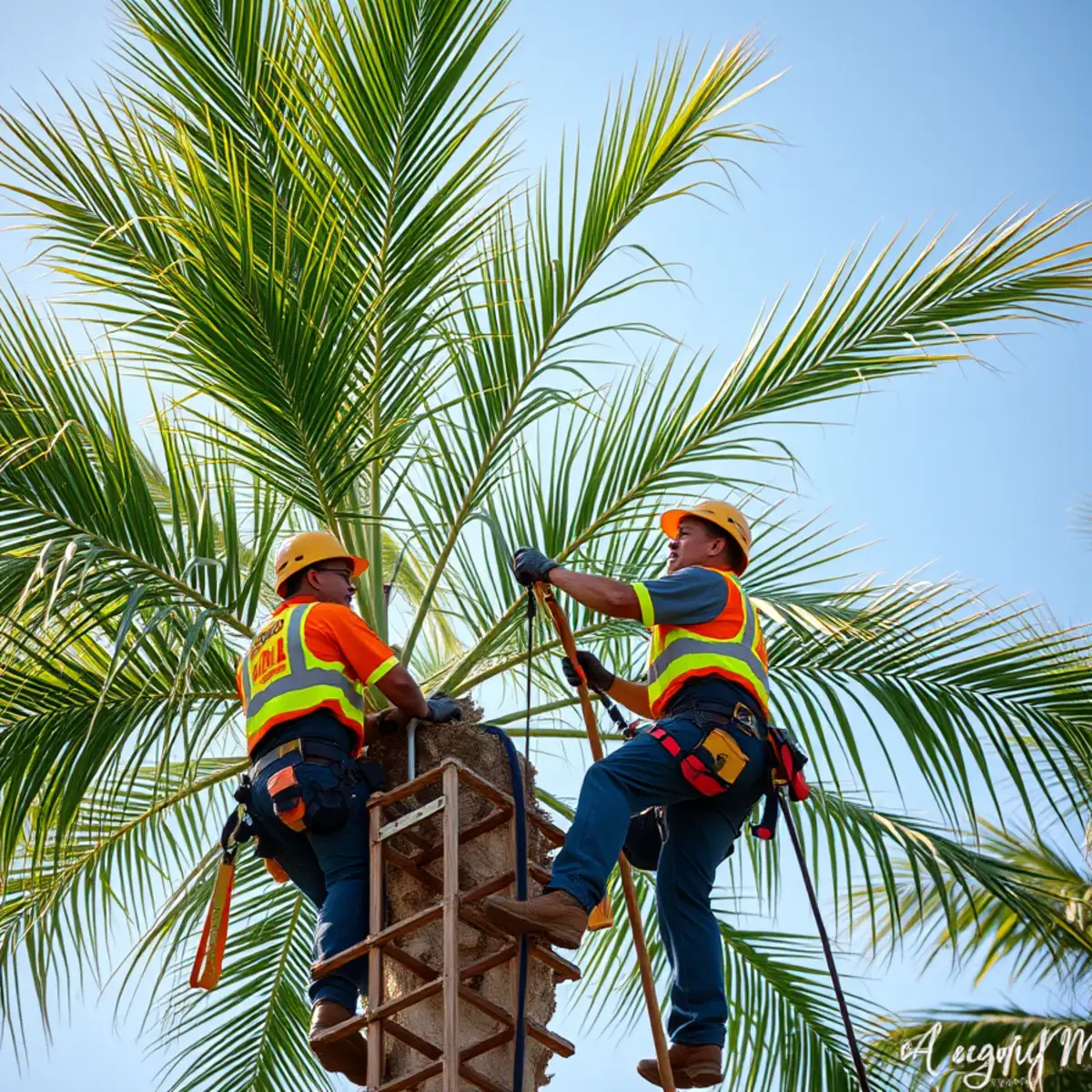
Palms are botanical monocots, more closely related to grass and bamboo than to woody dicot hardwood trees. Understanding this fundamental biological difference is crucial: a palm tree has only a single apical meristem—the 'growing heart' at the center of the crown. Injuring this terminal bud will kill the entire tree.
The Myth of the 'Hurricane Cut'
Every spring across Southwest Florida, well-meaning landscapers strip palm crowns down to just two or three upright fronds, calling it a 'hurricane cut'. Arboricultural research from the University of Florida has proven that this practice is devastating. Palms evolved over millions of years to withstand cyclonic winds by letting aerodynamic green fronds flex and protect the central bud. Stripping them deprives the tree of food-producing chlorophyll, induces severe nutrient deficiencies, and causes trunk constriction ('pencil-pointing').
The Golden 9-to-3 O'Clock Pruning Rule
When pruning palms, never remove fronds that grow above the horizontal 9 o'clock and 3 o'clock plane. Only prune fronds that are completely brown, dry, and drooping below horizontal. Green fronds, even those with slight tip browning, are actively translocating vital potassium and magnesium back into the palm's vascular system.
Sterilizing Pruning Blades and Avoiding Climbing Spikes
Never allow tree trimmers to use climbing spikes on palms you wish to keep alive. Spikes create permanent puncture wounds that bleed sap, attracting the devastating South American Palm Weevil and fungal pathogens like Thielaviopsis trunk rot. Always insist on disinfected, curved hand saws or aerial lifts.
The Dangers of Climbing Spikes on Palm Trunks
Climbing spikes should NEVER be used when pruning palm trees that are meant to live. Spikes puncture deep through the outer pseudo-bark into living vascular bundles. Because palms cannot seal or compartmentalize wounds like dicot hardwood trees, every puncture wound remains permanently open—becoming an entry portal for Ganoderma butt rot, Thielaviopsis trunk rot, and fungal decay.
Optimal Seasonal Pruning Windows and Micronutrient Fertilization
In Southwest Florida, the safest time to trim palms is late spring (April to May), just before summer rainy season begins. Only remove fronds that are completely brown and hanging below the horizontal 9-to-3 o'clock line. Furthermore, supplement sandy Lee County soils with controlled-release palm fertilizer formulated with an 8-2-12+4Mg ratio to prevent severe potassium and magnesium deficiencies.
Professional Tree Care Standards & Real-World Tradeoffs
Managing mature trees across Lehigh Acres and Lee County presents challenges unique to Southwest Florida. With an annual rainfall average near 56 inches, high water tables, and saturated sandy subsoils, trees face structural root shear during summer microbursts and tropical storm cycles.
Cutting corners—whether through improper “hurricane cuts”, aggressive flush-cuts, or driving 30-ton bucket trucks across buried septic systems—inevitably leads to accelerated decay, pest infestations, or costly property repairs.
We maintain branch collar integrity and natural branch defense zones. We never top shade trees or remove more than 20–25% of live foliage in a single season.
Traditional rope-and-saddle access allows us to work inside fenced backyards, canal banks, and over pool enclosures without heavy machinery damaging sandy lawns or septic tanks.
Property Owner Action Plan & Maintenance Checklist
Essential verification steps recommended before and during Florida storm season:
| Inspection Phase | Action Item | Safety & Compliance Value |
|---|---|---|
| 1. Ground & Root Assessment | Check root flare for fungal conks, loose soil mounding, or decayed roots. | Identifies catastrophic root-plate instability before high winds. |
| 2. Clearance & Deadwood | Prune branches overhanging roofs, power lines, and pool lanai cages. | Prevents structural roof punctures and gutter abrasion. |
| 3. Canopy Aerodynamics | Selectively thin interior secondary branches to reduce wind drag. | Allows hurricane gusts to blow through without uprooting the tree. |
| 4. Precision Climbing | Engage licensed climbers utilizing friction lowering blocks. | Eliminates heavy crane ruts and guarantees zero lawn compaction. |
Related Services & Local Service Areas
Need assistance with this topic on your property? Explore our dedicated service and municipal location resources:
Questions & Answers About This Guide
Practical advice from experienced Florida tree workers.
Yes, if the apical meristem was not physically punctured. Provide balanced palm fertilizer (8-2-12+4Mg) with controlled-release micronutrients and avoid any further pruning for at least 12 months.
About T's Trees and Landscaping
T's Trees and Landscaping is Lehigh Acres' hometown tree care specialist, providing 15+ years of traditional rope-and-saddle climbing, zero lawn rutting, and 24/7 storm damage recovery across Lee County.
Call (855) 615-0568 for a Free Written QuoteProtect Your Home Before the Next Storm Hits
Get a free on-site hazard assessment from Lehigh Acres' traditional climbing specialists. Zero lawn rutting, zero septic tank damage, and 24/7 emergency response.