
Hurricane Tree Canopy Thinning: How Wind Reduction Pruning Prevents Blowdown
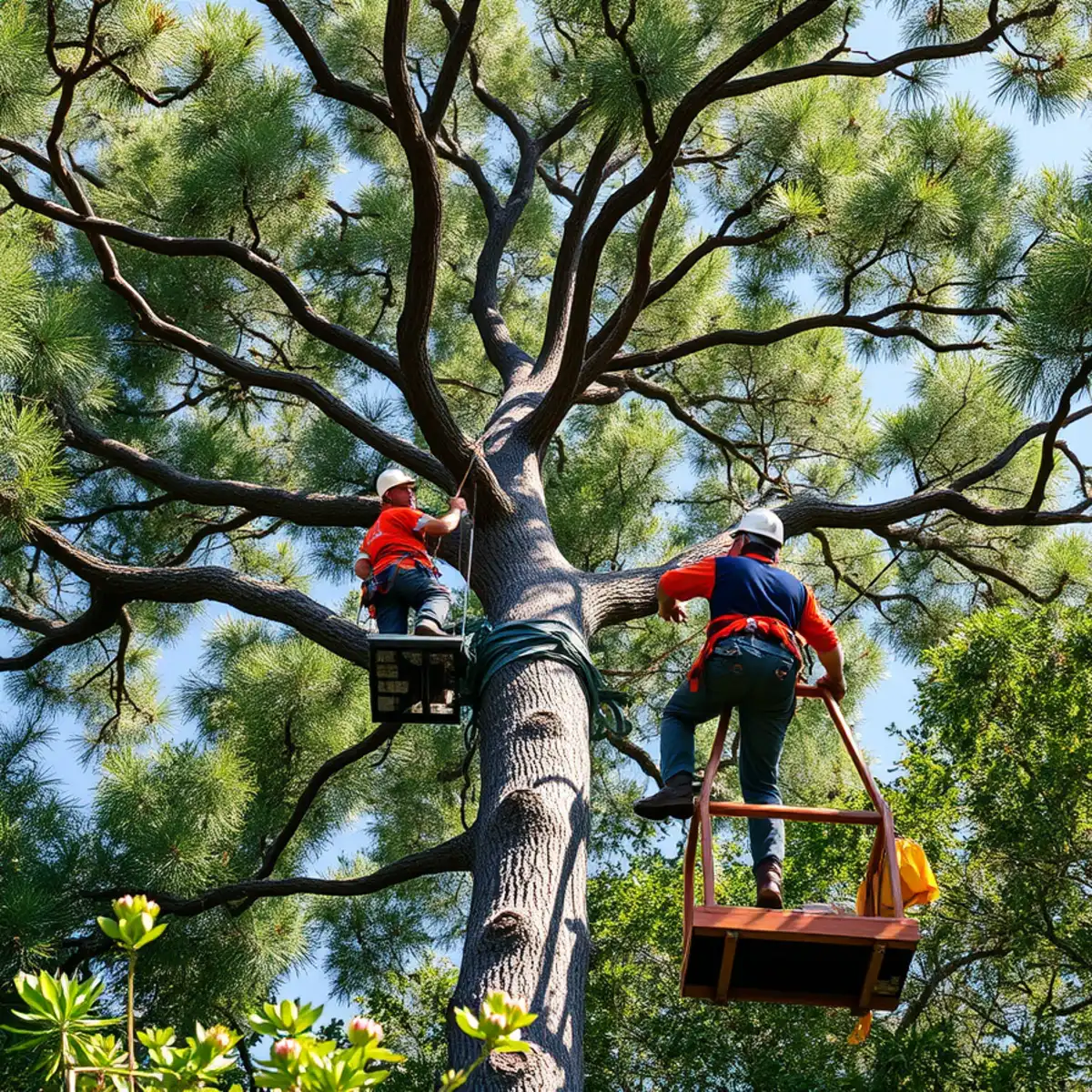
When 100 mph hurricane winds batter Southwest Florida, a tree's crown acts as an immense sail. If the canopy is dense and untrimmed, wind pressure generates immense rotational torque on the trunk and root ball. Once heavy rains saturate the sandy soil, the entire root plate can fail, toppling trees onto homes.
The Wind Tunnel Science of Aerodynamic Pruning
Research conducted at the University of Florida's Hurricane Research Center proved that selective crown thinning reduces wind drag coefficients by up to 35%. By systematically removing crossing branches, interior deadwood, and crowded secondary stems, wind passes harmlessly through the canopy instead of acting as a battering ram.
Reducing End-Weight on Sprawling Oak Limbs
Live oaks and laurel oaks frequently produce heavy horizontal limbs that stretch 30 to 40 feet across roofs. Under high wind gusts, these limbs oscillate violently. Subordination pruning—shortening the outer tips back to a strong lateral branch—reduces the bending moment and prevents disastrous limb fractures.
Why You Must Avoid Topping or 'Hat-Racking'
Lopping off the tops of large branches ('hat-racking') is illegal under Lee County ordinances and devastating to tree safety. Topping triggers rapid growth of weakly anchored watersprouts that blow off in moderate storms and introduces rot into large open trunk stubs.
The Danger of 'Lion-Tailing' and Over-Thinning Interior Branches
Inexperienced tree trimmers often strip all interior branches and leaves, leaving foliage only at the tips of long branches. This harmful practice, known as 'lion-tailing', actually increases wind vulnerability. It shifts all bending force to the ends of limbs, eliminates dampening oscillations, and causes long branches to snap violently during tropical storms.
Structural Weight Reduction on Sprawling Live Oaks
Southwest Florida live oaks are renowned for their massive horizontal scaffold limbs extending 30 to 40 feet outward over driveways and roofs. Structural reduction pruning uses subtle heading cuts back to healthy lateral branches (at least one-third the diameter of the parent limb) to relieve excessive gravitational and wind stress.
Professional Tree Care Standards & Real-World Tradeoffs
Managing mature trees across Lehigh Acres and Lee County presents challenges unique to Southwest Florida. With an annual rainfall average near 56 inches, high water tables, and saturated sandy subsoils, trees face structural root shear during summer microbursts and tropical storm cycles.
Cutting corners—whether through improper “hurricane cuts”, aggressive flush-cuts, or driving 30-ton bucket trucks across buried septic systems—inevitably leads to accelerated decay, pest infestations, or costly property repairs.
We maintain branch collar integrity and natural branch defense zones. We never top shade trees or remove more than 20–25% of live foliage in a single season.
Traditional rope-and-saddle access allows us to work inside fenced backyards, canal banks, and over pool enclosures without heavy machinery damaging sandy lawns or septic tanks.
Property Owner Action Plan & Maintenance Checklist
Essential verification steps recommended before and during Florida storm season:
| Inspection Phase | Action Item | Safety & Compliance Value |
|---|---|---|
| 1. Ground & Root Assessment | Check root flare for fungal conks, loose soil mounding, or decayed roots. | Identifies catastrophic root-plate instability before high winds. |
| 2. Clearance & Deadwood | Prune branches overhanging roofs, power lines, and pool lanai cages. | Prevents structural roof punctures and gutter abrasion. |
| 3. Canopy Aerodynamics | Selectively thin interior secondary branches to reduce wind drag. | Allows hurricane gusts to blow through without uprooting the tree. |
| 4. Precision Climbing | Engage licensed climbers utilizing friction lowering blocks. | Eliminates heavy crane ruts and guarantees zero lawn compaction. |
Related Services & Local Service Areas
Need assistance with this topic on your property? Explore our dedicated service and municipal location resources:
Questions & Answers About This Guide
Practical advice from experienced Florida tree workers.
ANSI A300 standards recommend removing no more than 20% to 25% of live foliage in a single pruning cycle to avoid shocking the tree.
About T's Trees and Landscaping
T's Trees and Landscaping is Lehigh Acres' hometown tree care specialist, providing 15+ years of traditional rope-and-saddle climbing, zero lawn rutting, and 24/7 storm damage recovery across Lee County.
Call (855) 615-0568 for a Free Written QuoteProtect Your Home Before the Next Storm Hits
Get a free on-site hazard assessment from Lehigh Acres' traditional climbing specialists. Zero lawn rutting, zero septic tank damage, and 24/7 emergency response.