
Protecting Shallow Tree Roots in Florida Sandy Soils from Lawn Mower Damage
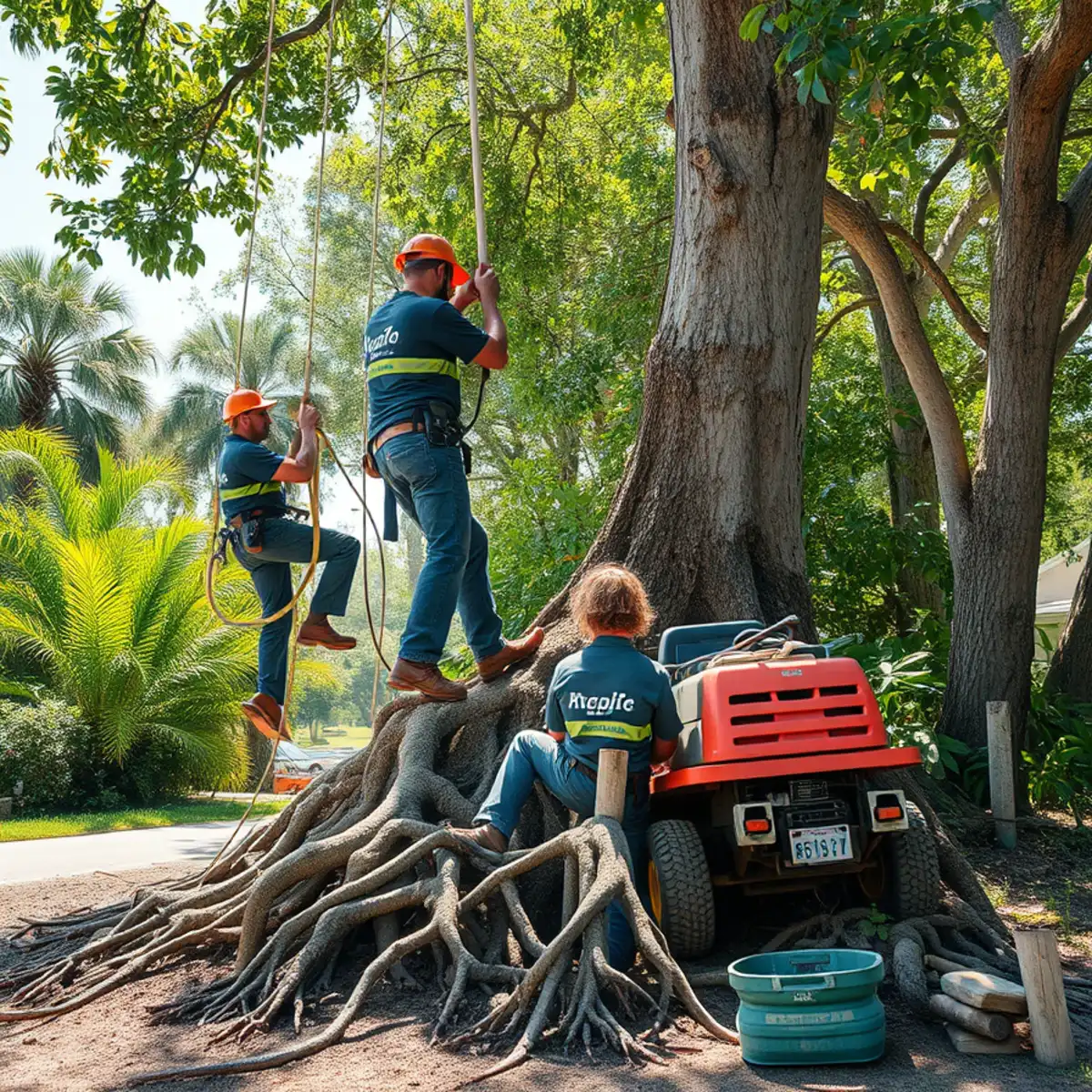
It is a familiar frustration for Lehigh Acres homeowners: tree roots snaking across the lawn surface, skinning mower blades and making mowing hazardous. Why do roots surface in Florida, and what can you do to resolve the problem without killing the tree?
Why Tree Roots Grow Near the Surface in Southwest Florida
Contrary to popular belief, tree roots do not grow deep into the ground searching for water. More than 90% of tree roots live in the top 12 to 18 inches of soil where oxygen is available. In Southwest Florida, our high water table and compacted sandy soils force roots directly to the surface to breathe.
The Danger of Mower and Weed-Trimmer Wounds
Every time a heavy lawnmower blade strikes an exposed root or a string trimmer strips the bark, it creates an open wound. In Florida's humid climate, wood-decay fungi (like Ganoderma) enter these wounds, rotting the roots that hold the tree upright.
The Solution: Convert Root Zones to Mulch Beds
Never cover exposed roots with several inches of dense topsoil or pour concrete over them—this suffocates root respiration. The gold standard remedy is establishing a wide, 3-inch ring of organic pine straw or wood chip mulch, completely eliminating the need to mow over roots.
Why Southwest Florida Soils Force Roots to the Surface
In Lehigh Acres and Lee County, high summer water tables and compacted sandy hardpan prevent tree roots from growing deeply into the earth. More than 90% of a tree's absorbing and structural roots occupy the top 12 to 18 inches of soil. During rainy periods, roots grow right at the surface to access vital atmospheric oxygen.
Converting High-Risk Mower Zones into Organic Mulch Islands
Repeatedly nicking surface roots with commercial lawn mower blades and string trimmers creates permanent open wounds that invite Ganoderma and Armillaria root rot fungi. The simplest, most effective arborist solution is establishing an extensive 3-inch ring of pine bark or hardwood mulch out to the tree's drip line, keeping mowers safely away.
Professional Tree Care Standards & Real-World Tradeoffs
Managing mature trees across Lehigh Acres and Lee County presents challenges unique to Southwest Florida. With an annual rainfall average near 56 inches, high water tables, and saturated sandy subsoils, trees face structural root shear during summer microbursts and tropical storm cycles.
Cutting corners—whether through improper “hurricane cuts”, aggressive flush-cuts, or driving 30-ton bucket trucks across buried septic systems—inevitably leads to accelerated decay, pest infestations, or costly property repairs.
We maintain branch collar integrity and natural branch defense zones. We never top shade trees or remove more than 20–25% of live foliage in a single season.
Traditional rope-and-saddle access allows us to work inside fenced backyards, canal banks, and over pool enclosures without heavy machinery damaging sandy lawns or septic tanks.
Property Owner Action Plan & Maintenance Checklist
Essential verification steps recommended before and during Florida storm season:
| Inspection Phase | Action Item | Safety & Compliance Value |
|---|---|---|
| 1. Ground & Root Assessment | Check root flare for fungal conks, loose soil mounding, or decayed roots. | Identifies catastrophic root-plate instability before high winds. |
| 2. Clearance & Deadwood | Prune branches overhanging roofs, power lines, and pool lanai cages. | Prevents structural roof punctures and gutter abrasion. |
| 3. Canopy Aerodynamics | Selectively thin interior secondary branches to reduce wind drag. | Allows hurricane gusts to blow through without uprooting the tree. |
| 4. Precision Climbing | Engage licensed climbers utilizing friction lowering blocks. | Eliminates heavy crane ruts and guarantees zero lawn compaction. |
Related Services & Local Service Areas
Need assistance with this topic on your property? Explore our dedicated service and municipal location resources:
Questions & Answers About This Guide
Practical advice from experienced Florida tree workers.
Cutting major surface roots larger than 2 inches in diameter can destabilize the tree and cause crown branch dieback. Consult an arborist before making any cuts.
About T's Trees and Landscaping
T's Trees and Landscaping is Lehigh Acres' hometown tree care specialist, providing 15+ years of traditional rope-and-saddle climbing, zero lawn rutting, and 24/7 storm damage recovery across Lee County.
Call (855) 615-0568 for a Free Written QuoteProtect Your Home Before the Next Storm Hits
Get a free on-site hazard assessment from Lehigh Acres' traditional climbing specialists. Zero lawn rutting, zero septic tank damage, and 24/7 emergency response.